Atlas · collections
Collections
Series of plates on a single theme, to be read in sequence.
-
Collection · 27 plates
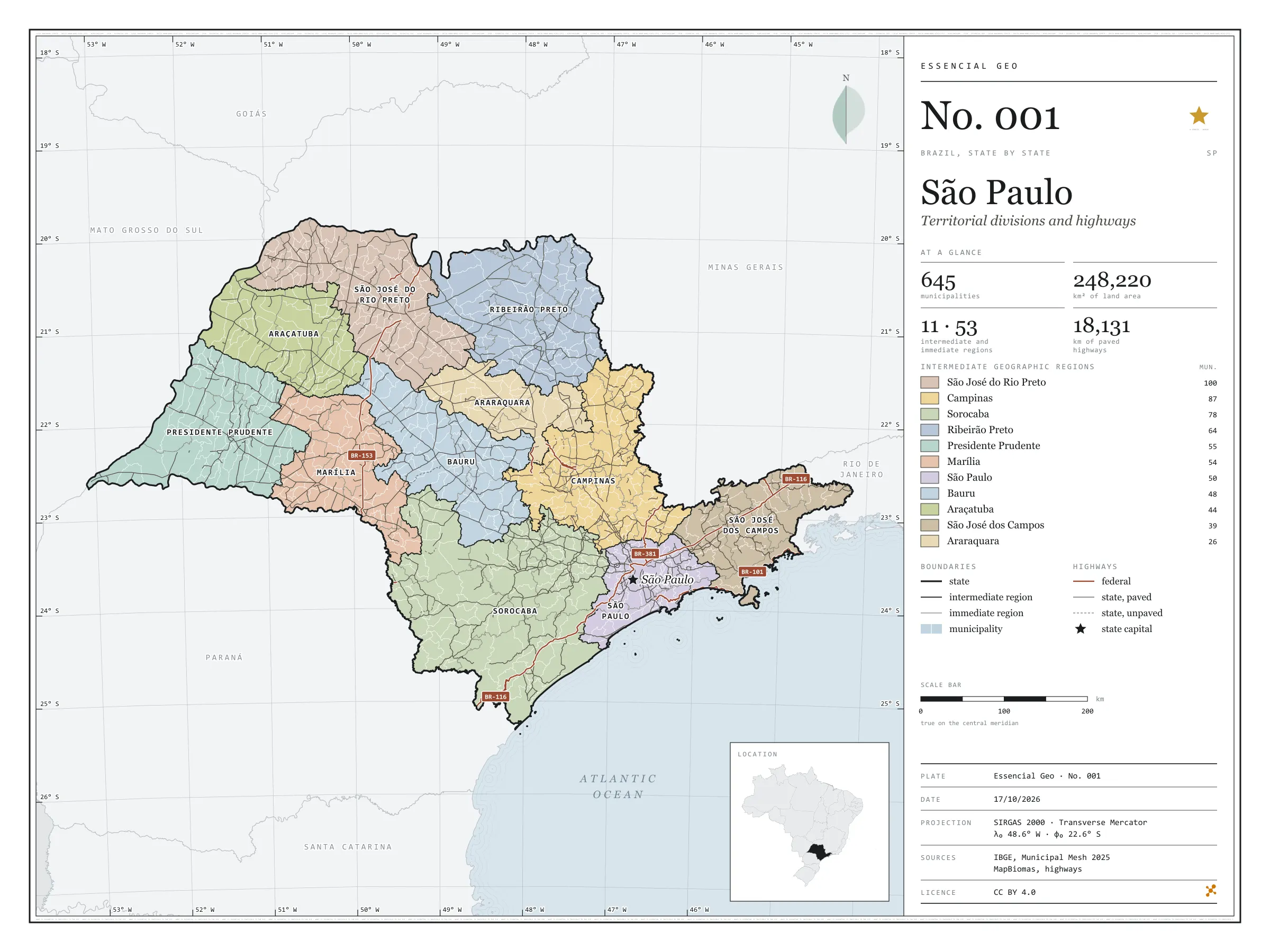
Brazil, state by state
A cartographic base for each federative unit — municipalities, geographic regions, boundary and highways — all with the same design and the same files.
27 of 27 publishedView the collection -
Collection · 4 plates
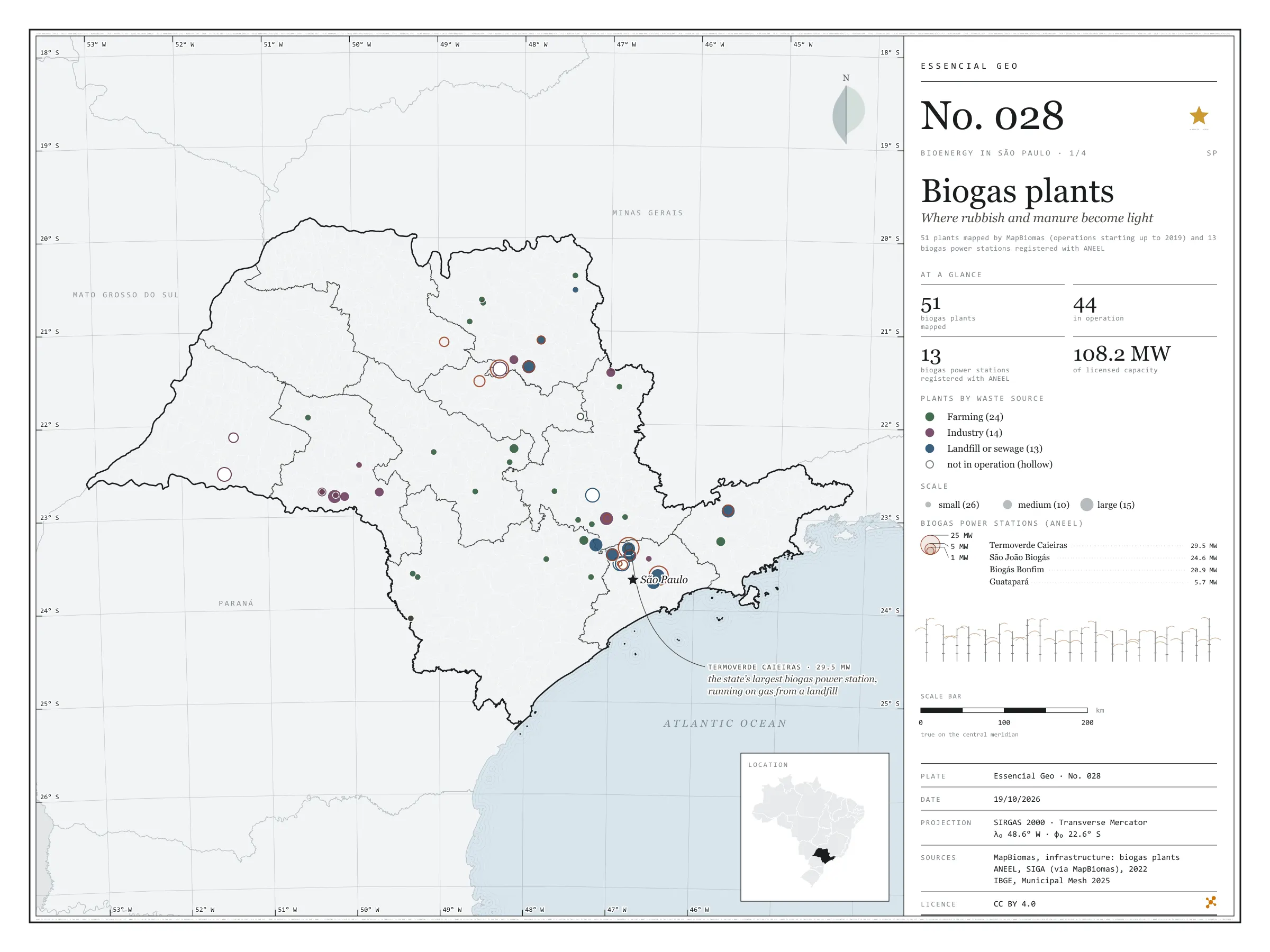
Bioenergy in São Paulo
Biogas plants, livestock, sugarcane and sugar-energy mills: where the residues that can become energy are found across the state.
4 of 4 publishedView the collection -
Collection · 4 plates
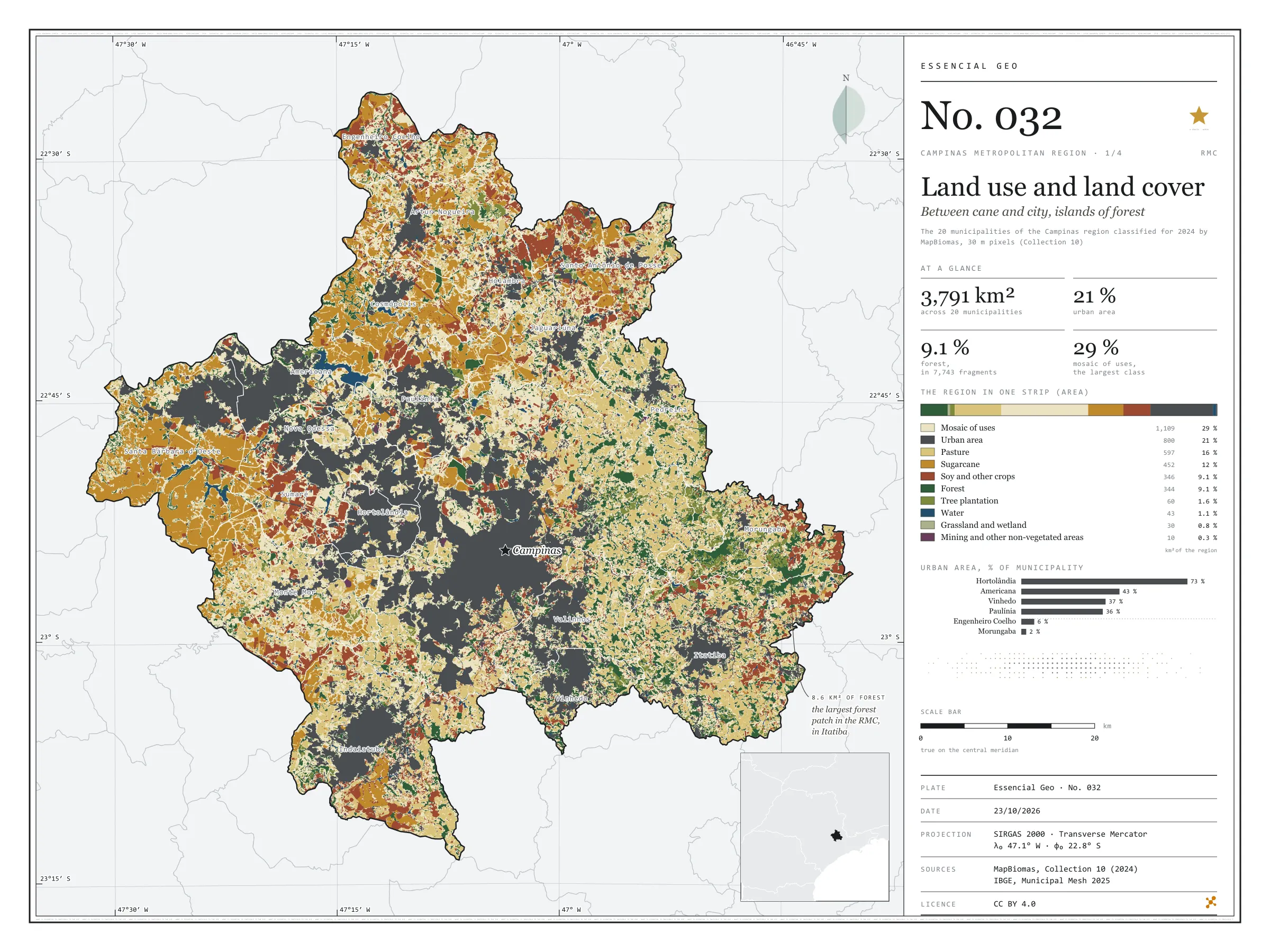
Campinas Metropolitan Region
Land use, households, income and water in the region where this atlas is made.
4 of 4 publishedView the collection -
Collection · 3 plates
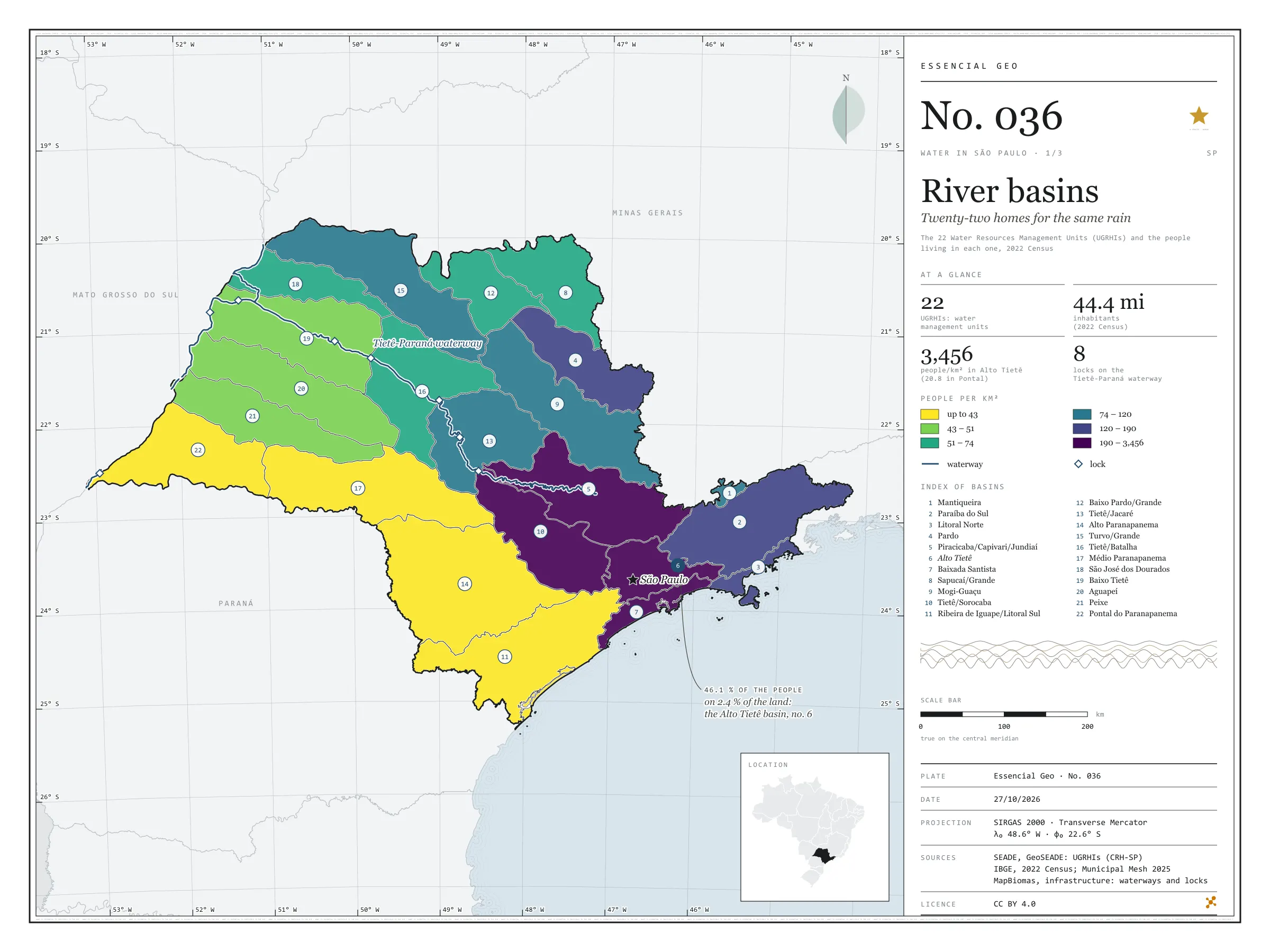
Water in São Paulo
River basins, the drainage network and protected areas: the path of water across the state.
3 of 3 publishedView the collection -
Collection · 3 plates
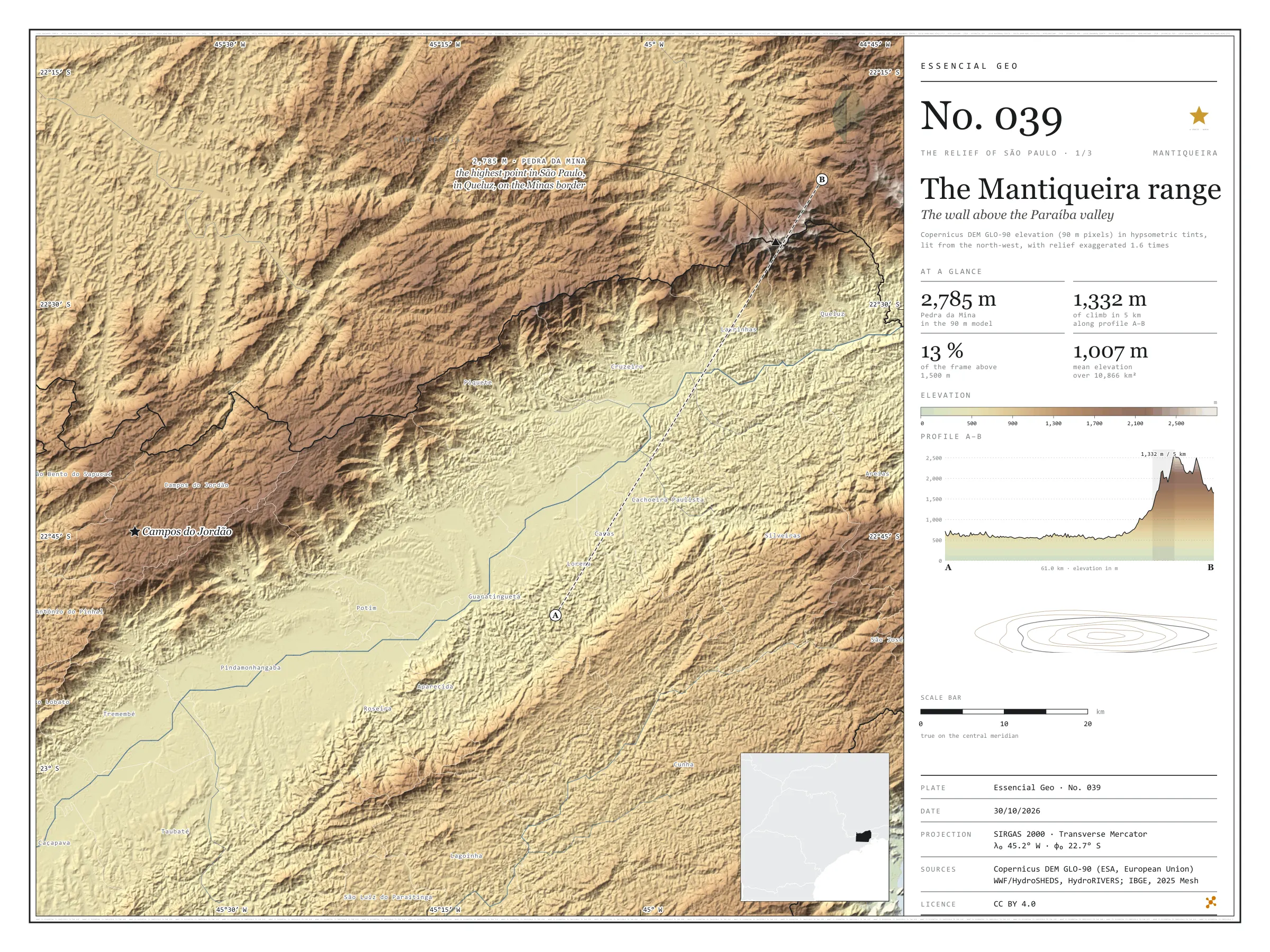
The relief of São Paulo
The Mantiqueira range, the Serra do Mar and the cuestas, in hypsometric tints and hillshade.
3 of 3 publishedView the collection -
Collection · 3 plates
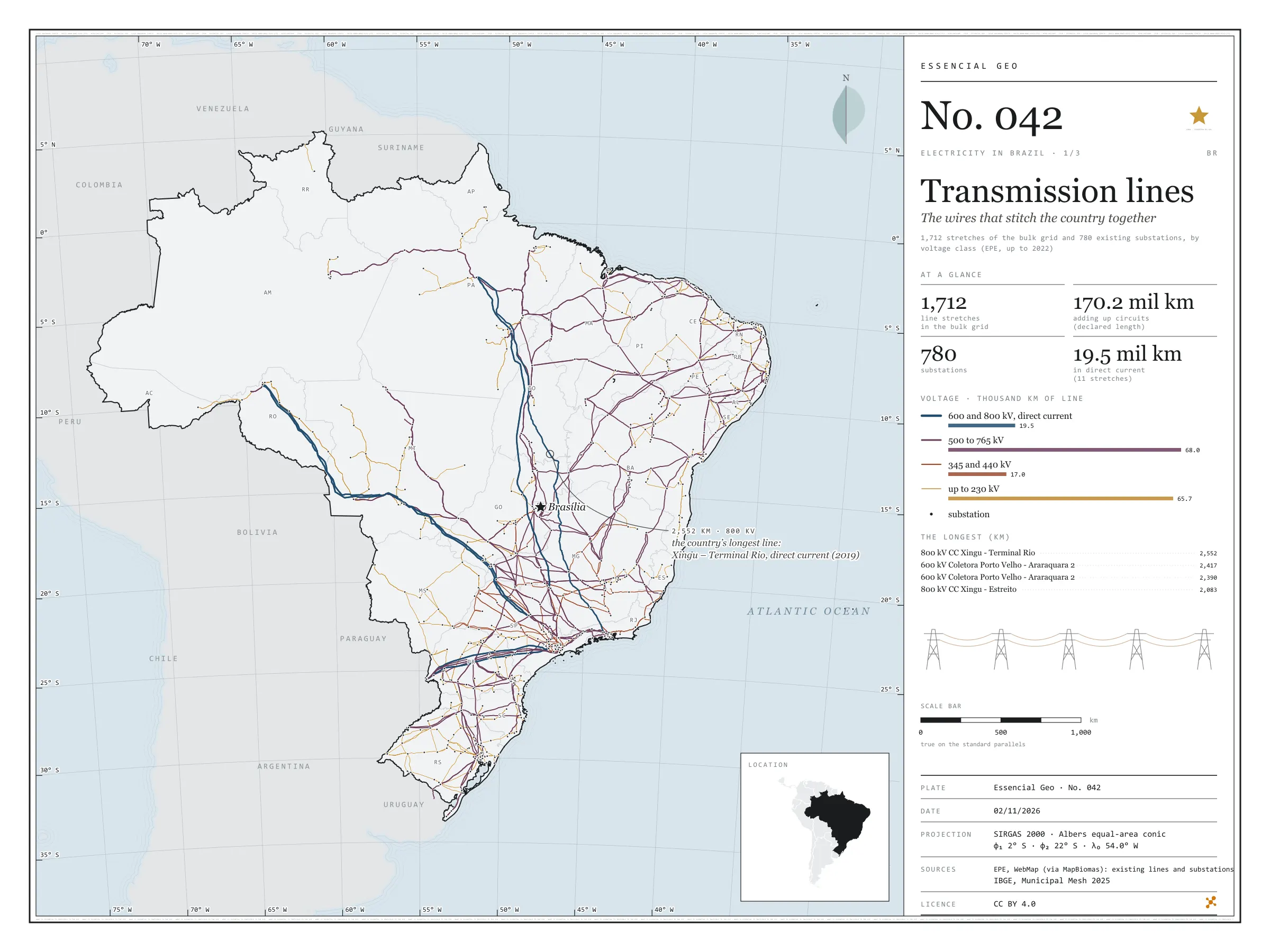
Electricity in Brazil
Transmission lines and substations, power plants by source and distributed solar generation by municipality.
3 of 3 publishedView the collection -
Collection · 5 plates
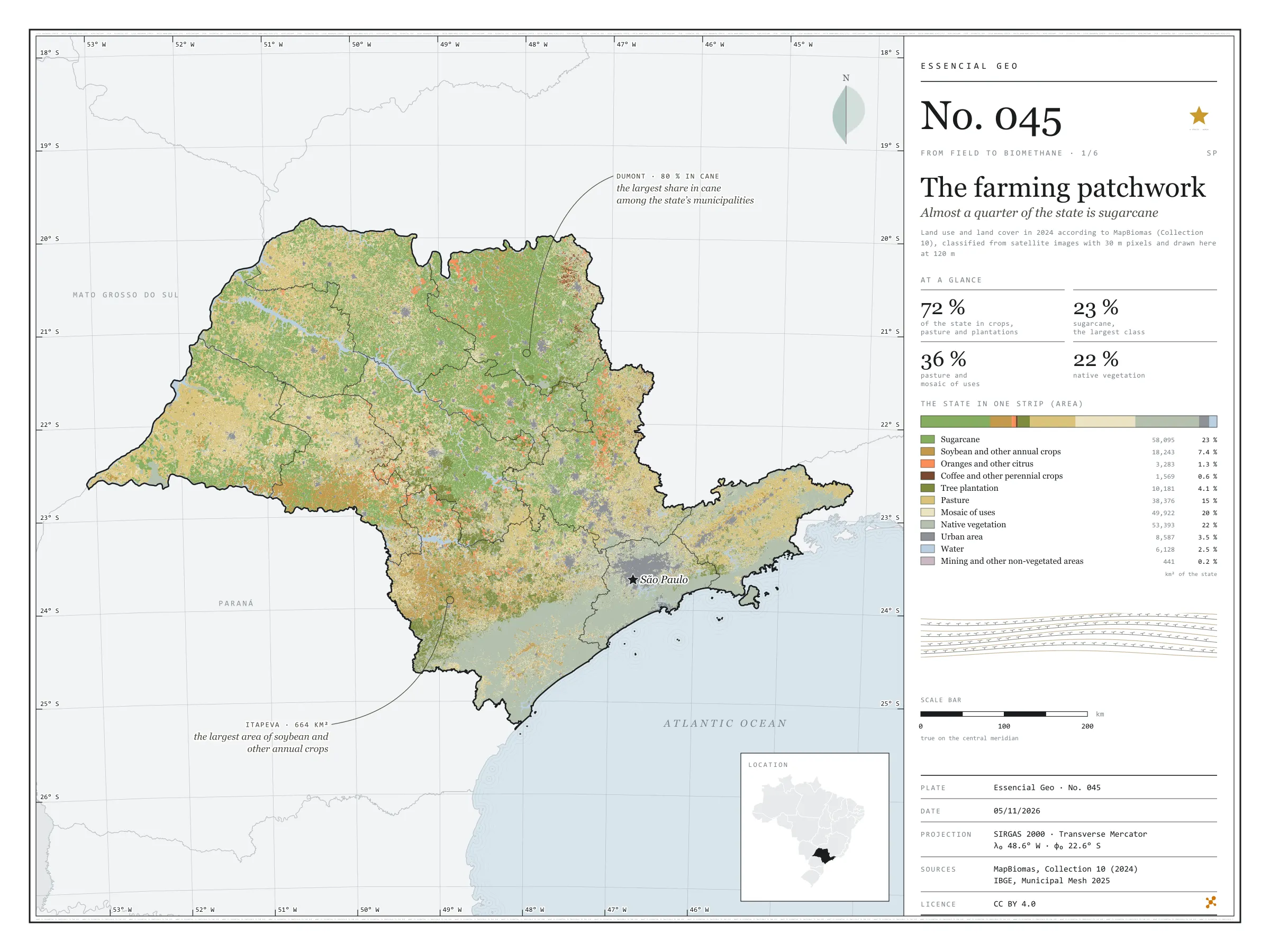
From field to biomethane
São Paulo’s farming mosaic (sugarcane, oranges, maize and soy), urban waste and sewage, and the biomethane that could come from all of it.
5 of 5 publishedView the collection -
Collection · 4 plates
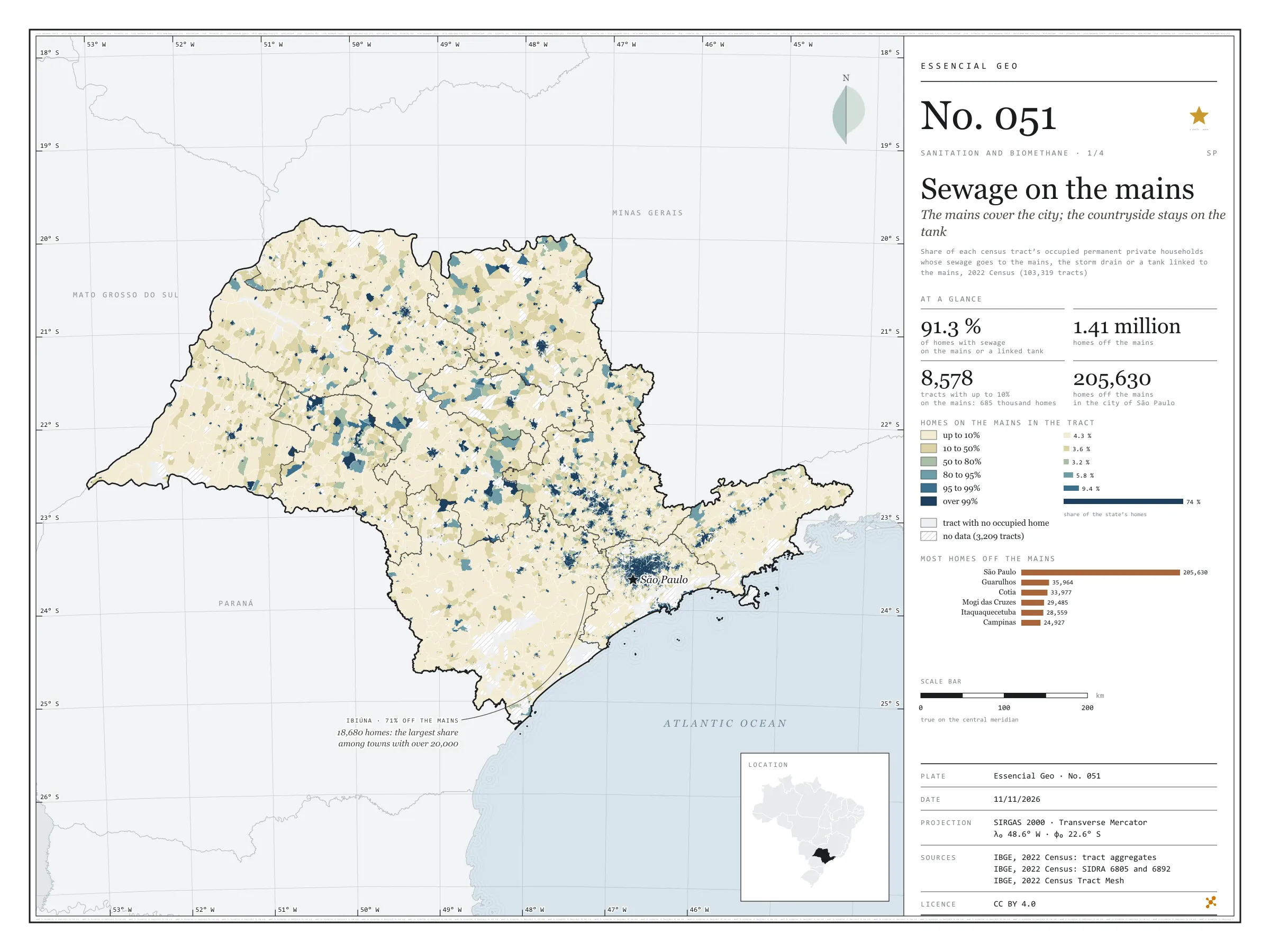
Sanitation and biomethane
São Paulo’s sewage and rubbish tract by tract in the 2022 Census: who is on the mains, where the rest goes, where rubbish burns and how much biomethane sludge could yield.
4 of 4 publishedView the collection -
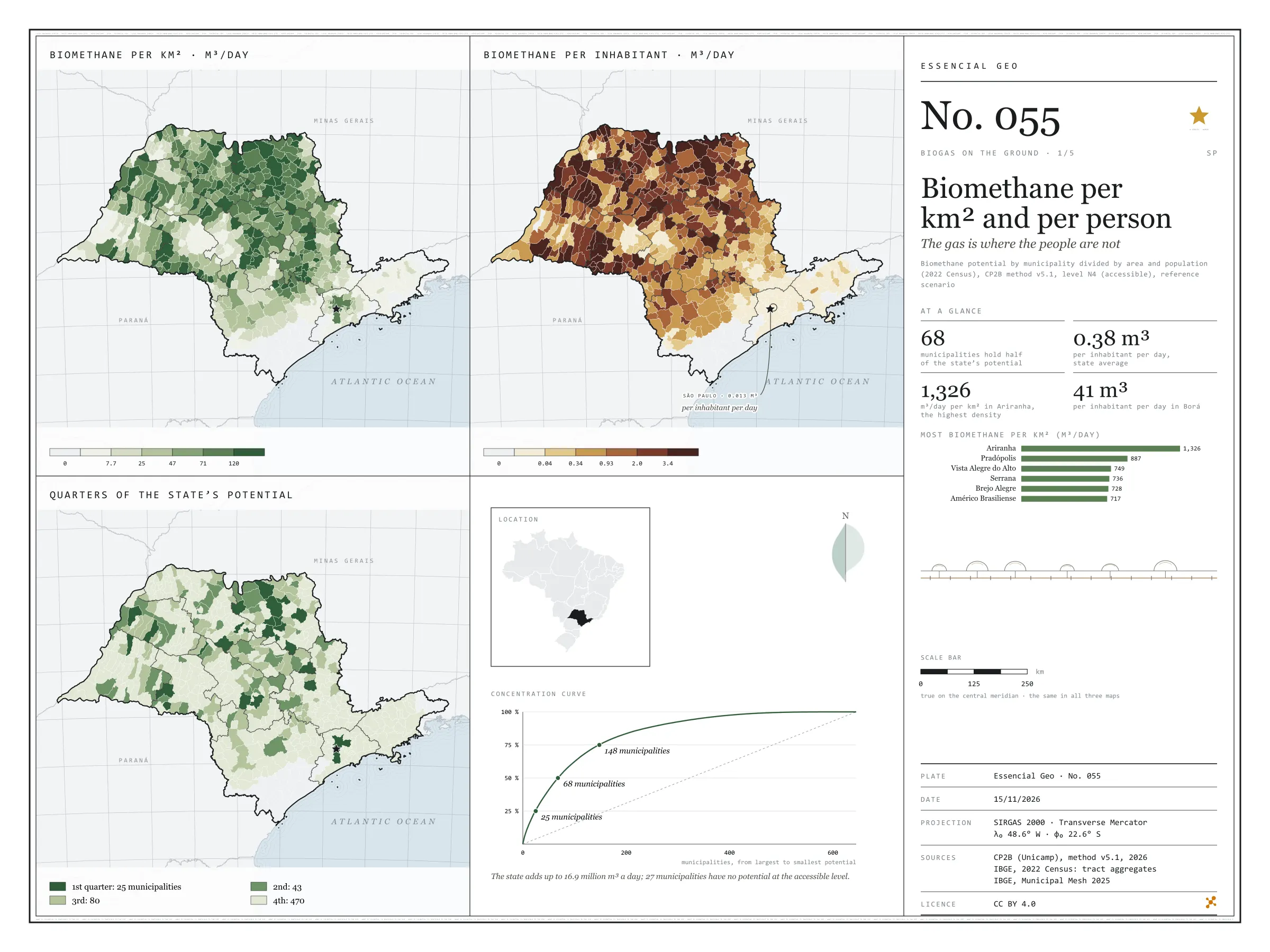
Collection · 5 plates
Biogas on the ground
São Paulo’s biomethane potential on the ground: per km² and per person, the leading source outside sugarcane, the distance to gas pipelines and the power grid, and what already operates.
5 of 5 publishedView the collection -
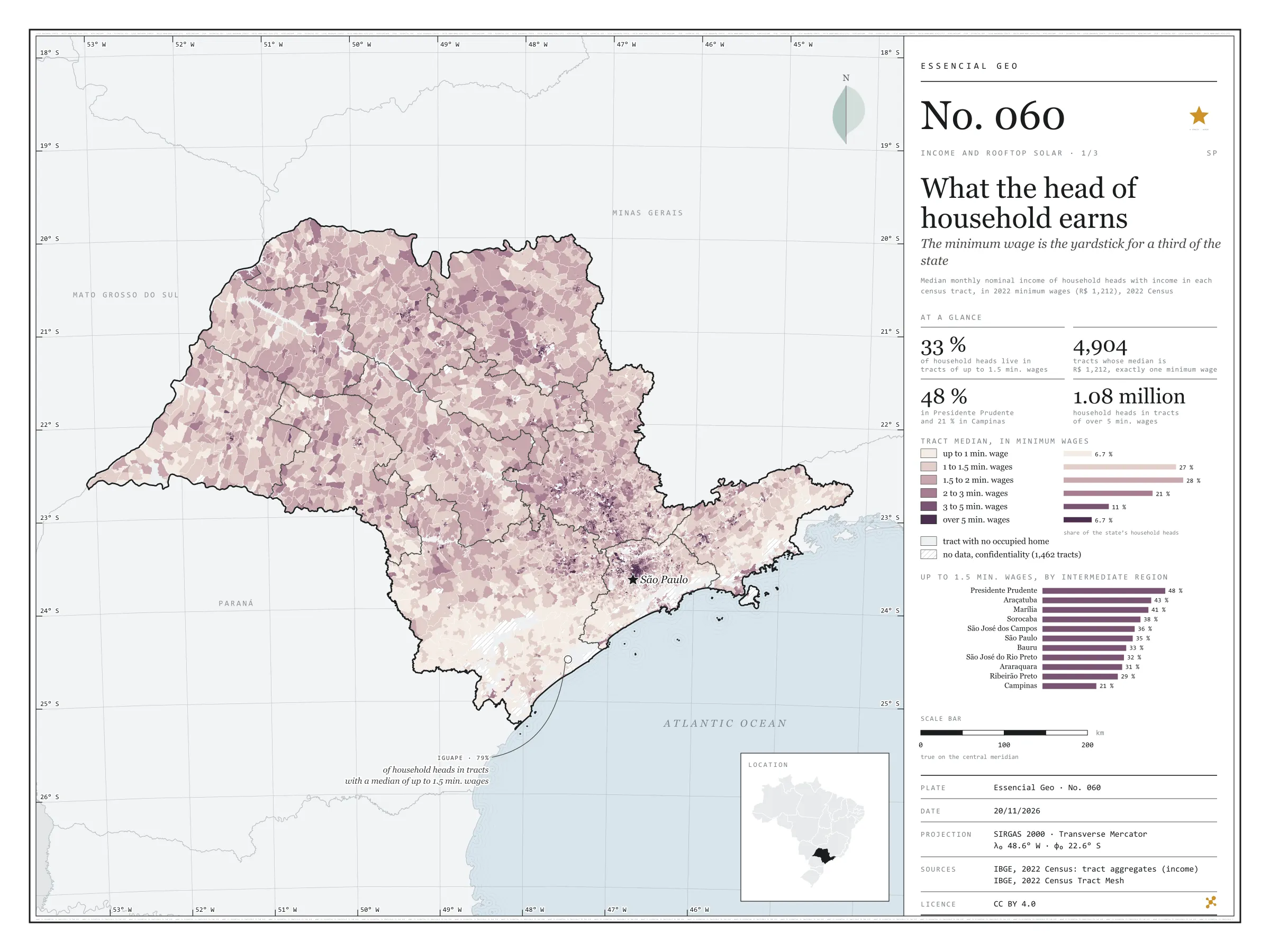
Collection · 3 plates
Income and rooftop solar
What the head of household earns, tract by tract and in the metropolis, and whether rooftop solar follows income: it does not.
3 of 3 publishedView the collection -
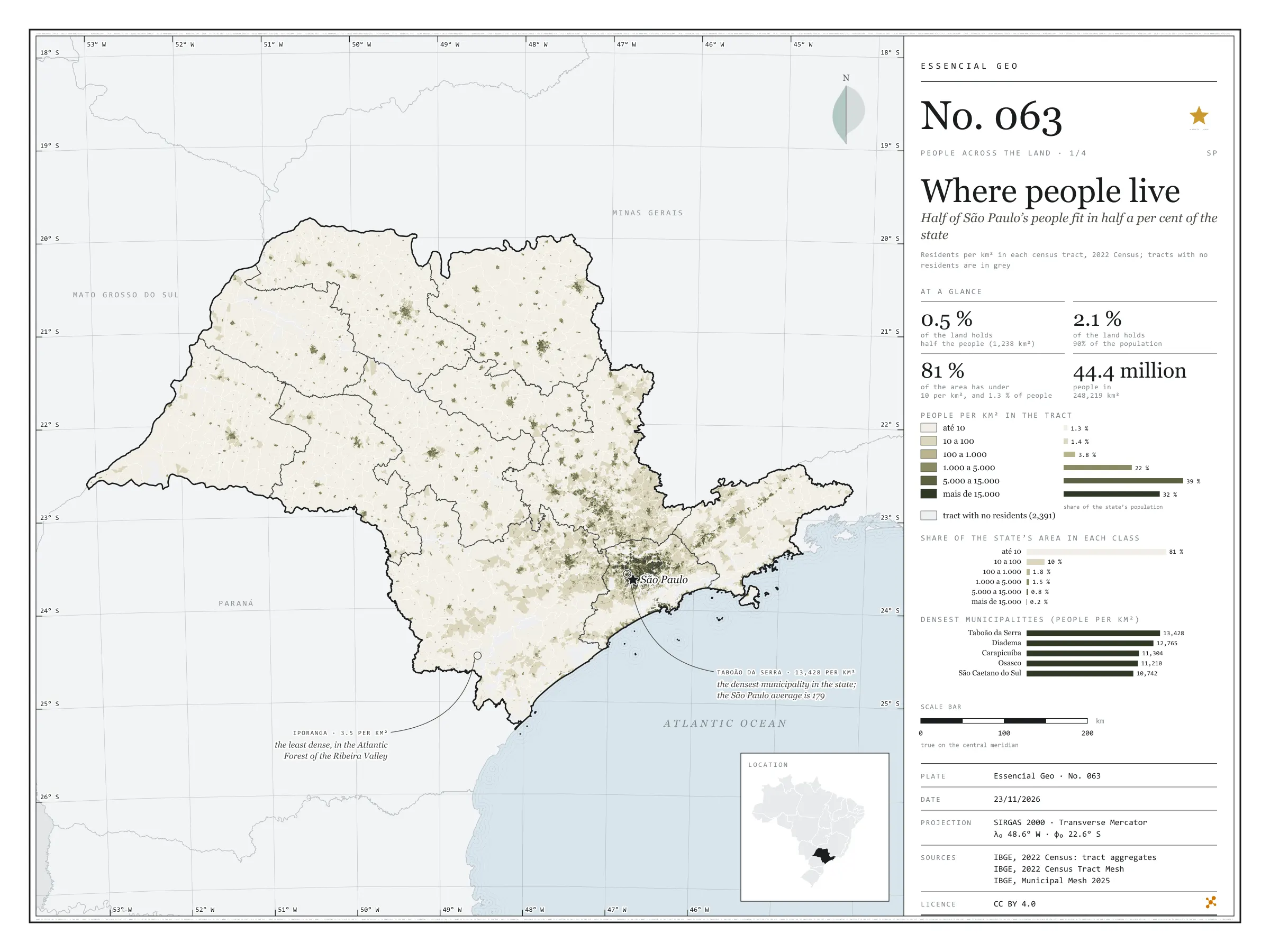
Collection · 4 plates
People across the land
Where São Paulo’s people live, tract by tract: density, the age and sex of each municipality, those aged 60 or over and who still lives in the countryside.
4 of 4 publishedView the collection -
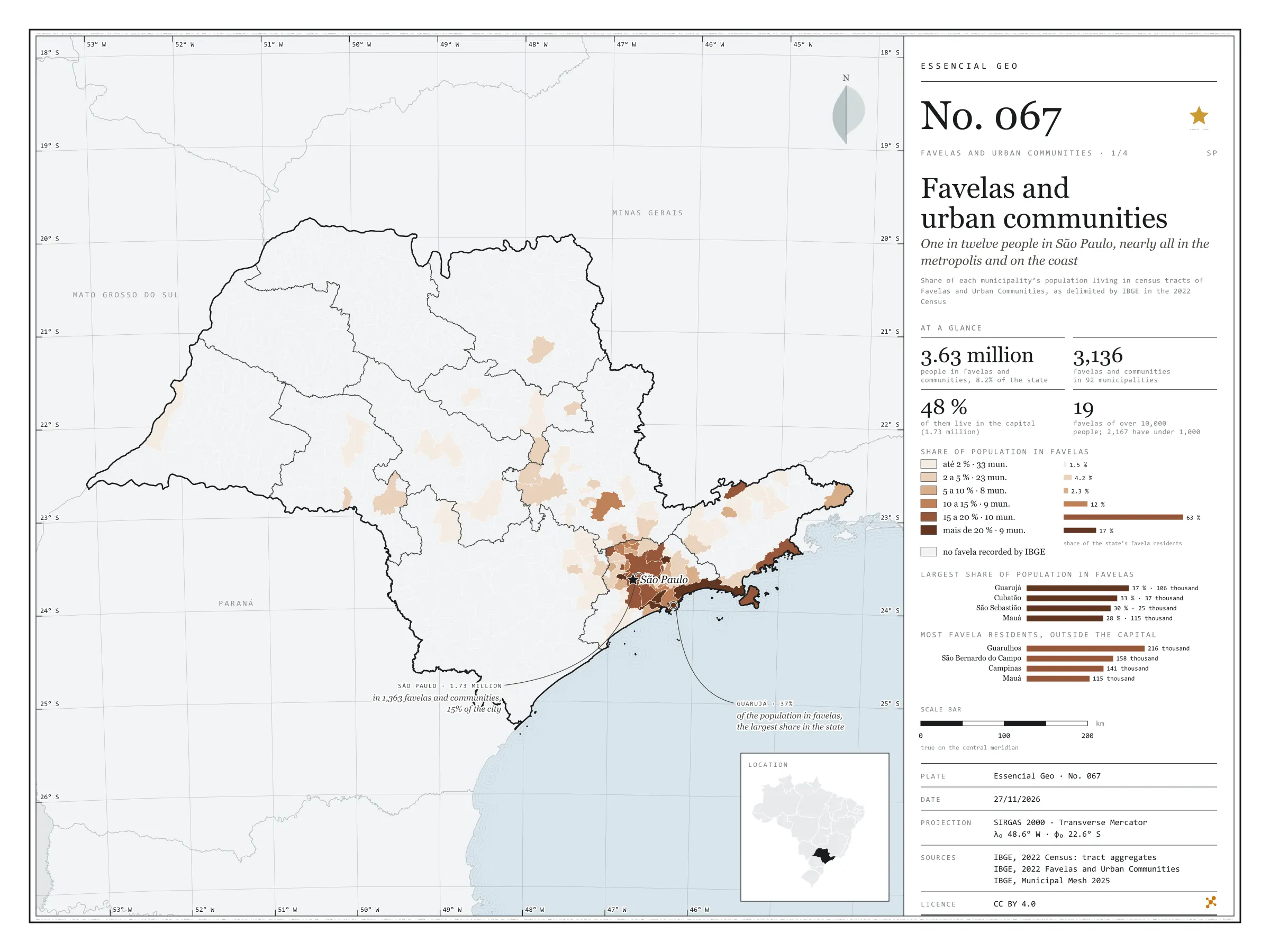
Collection · 4 plates
Favelas and urban communities
One in twelve people in São Paulo lives in a favela: where they are, the largest in the metropolis, streets without light or pavements and the income gap with the rest of the same town.
4 of 4 publishedView the collection -
Collection · 5 plates
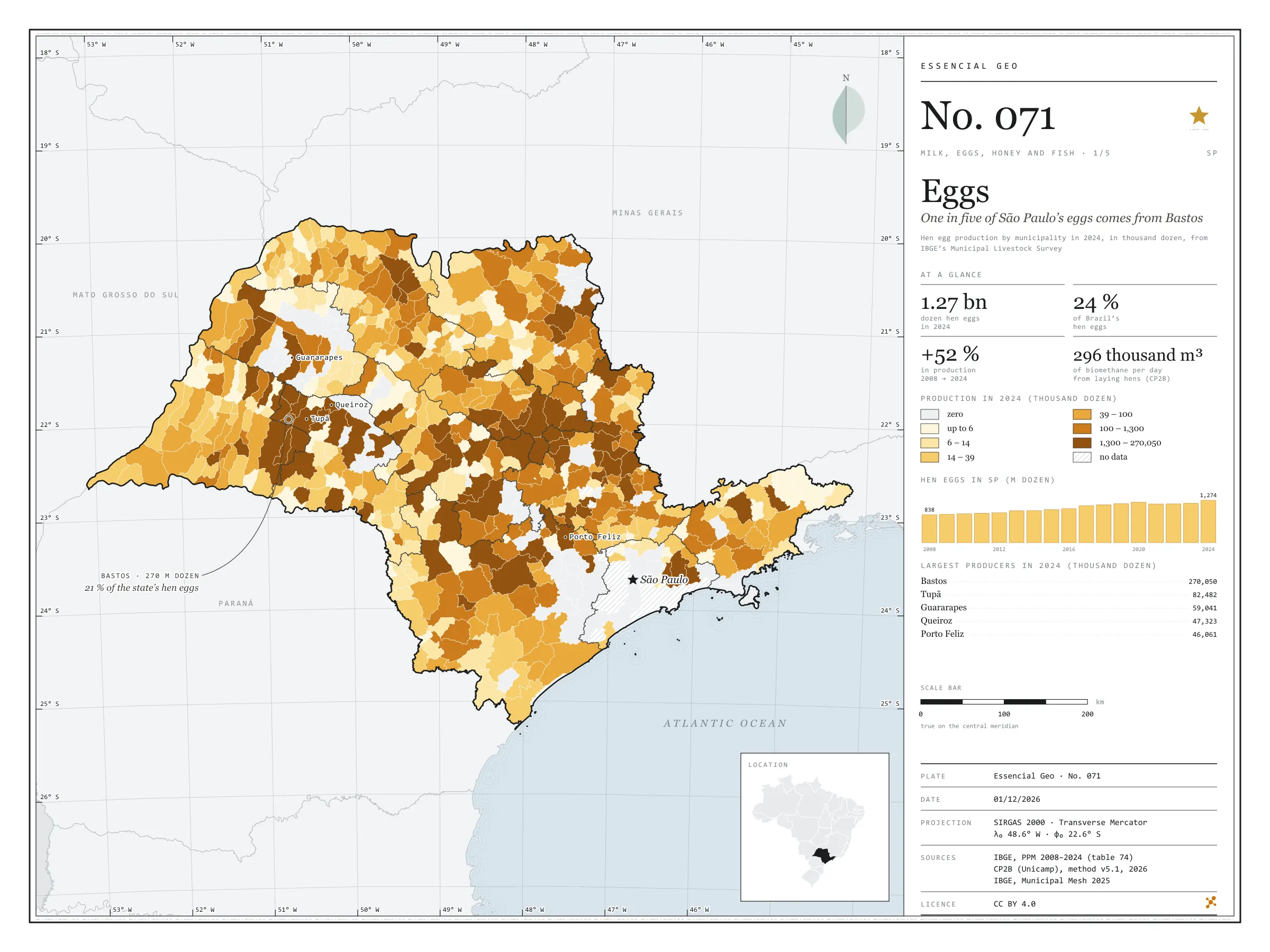
Milk, eggs, honey and fish
What animals produce in São Paulo, municipality by municipality: the eggs of Bastos, milk, honey, tilapia from the reservoirs and what each is worth.
5 of 5 publishedView the collection -
Collection · 5 plates
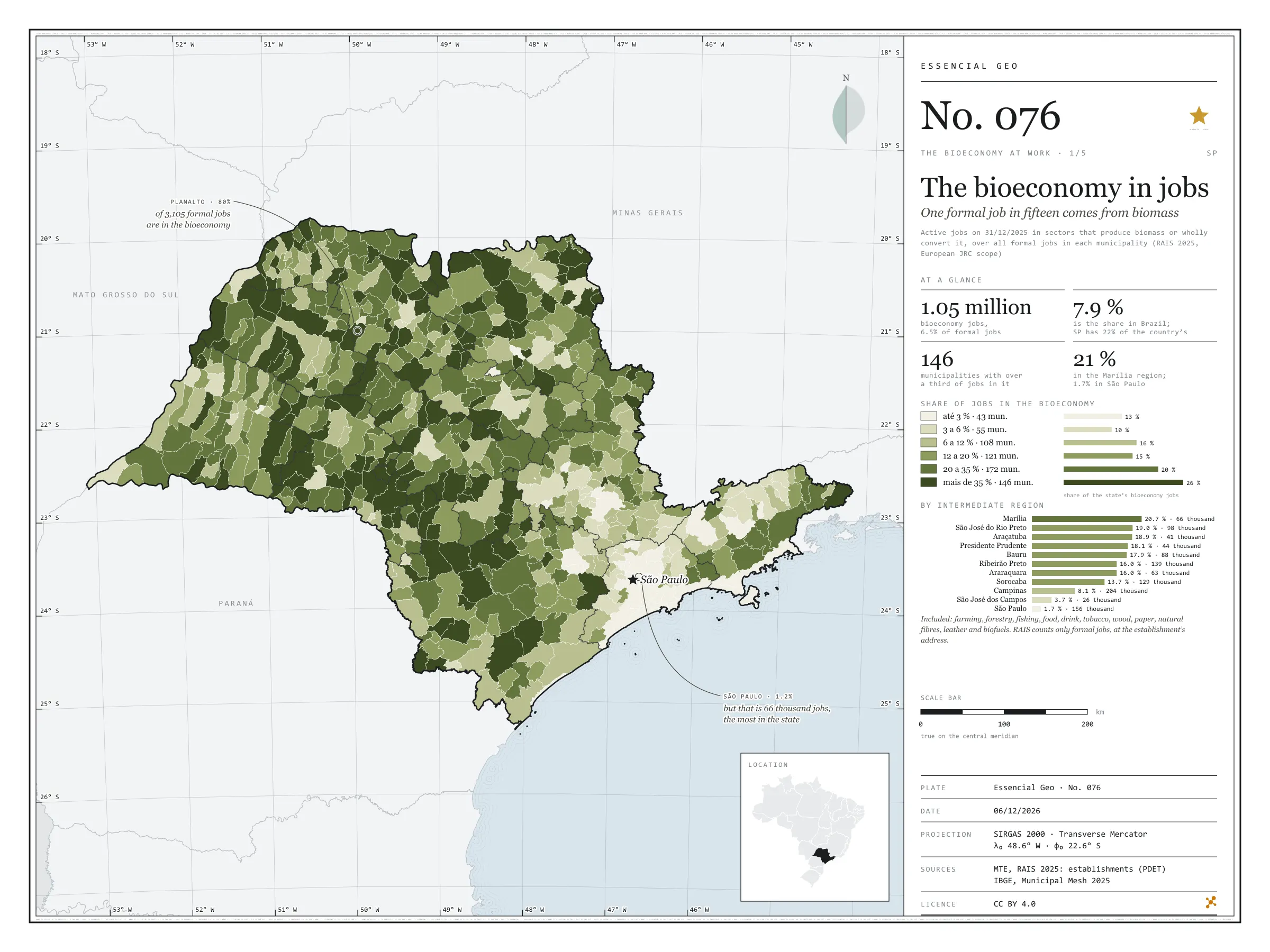
The bioeconomy at work
Who works with biomass in São Paulo, from RAIS: bioeconomy jobs in each municipality, the industries that generate organic waste, the sugarcane chain and who treats rubbish and sewage.
5 of 5 publishedView the collection -
Collection · 4 plates
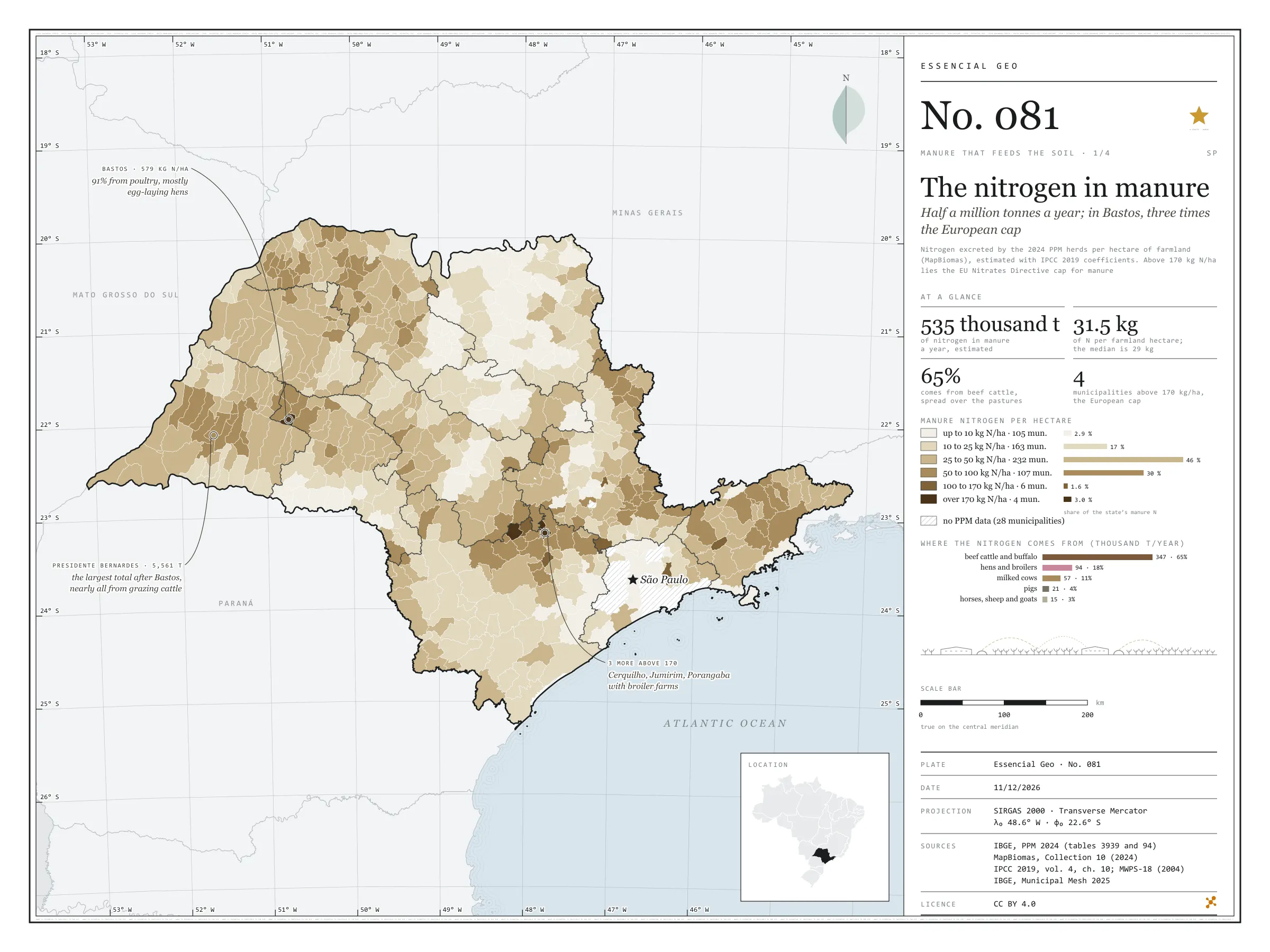
Manure that feeds the soil
The nitrogen and phosphorus from São Paulo’s herds, the load per hectare of cropland and the place of biogas digestate in the state’s fertiliser.
4 of 4 publishedView the collection -
Collection · 4 plates
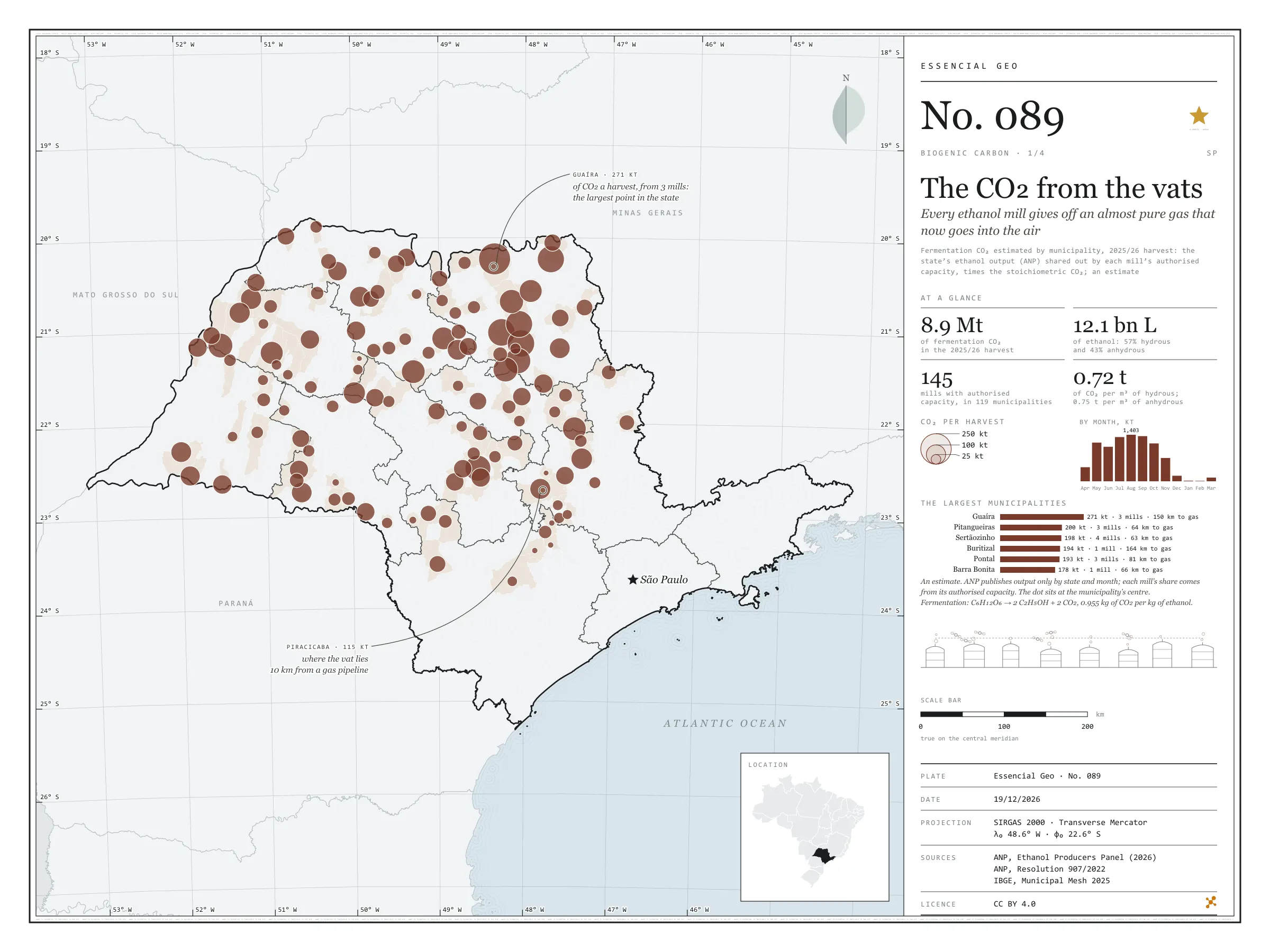
Biogenic carbon
The CO₂ released by ethanol fermentation and biogas upgrading: where it is, how much there is and what it could become.
4 of 4 publishedView the collection -
Collection · 5 plates
Bioenergy, crossed
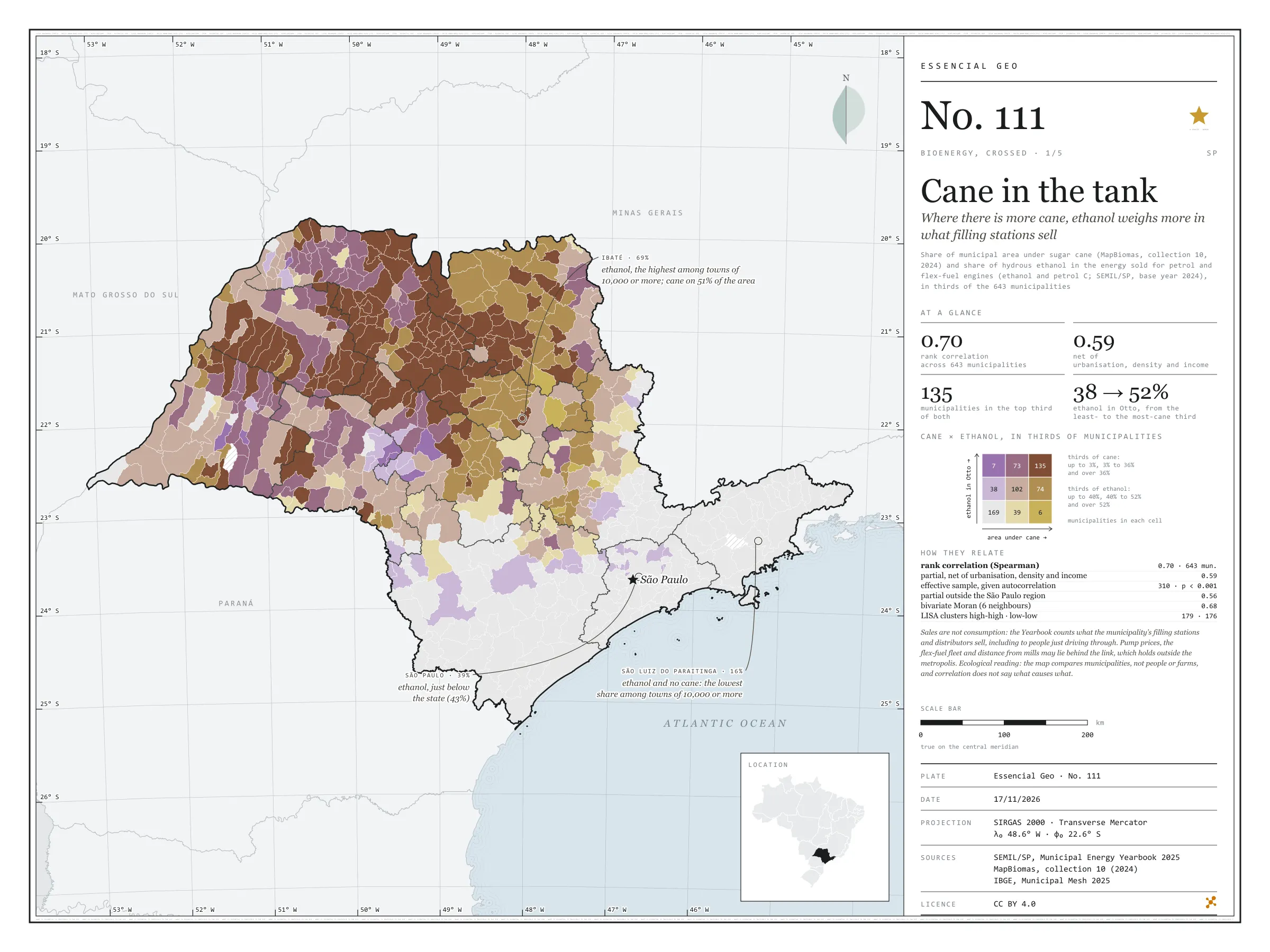
Five crossings of São Paulo’s bioenergy with what filling stations sell, with the countryside and with town halls: cane and ethanol, biomethane and diesel, eucalyptus and forest, cattle and fertiliser, and small towns far from the pipeline.
5 of 5 publishedView the collection
In preparation
The next series in the atlas. Each gets its own page once its first plate is published.
-
Biomass monitor
What Brazil produces as biomass, municipality by municipality, with open data renewed every year: herds, crops, planted forests, firewood and the plants that turn it all into energy.
-
The new geography of ethanol
Brazilian ethanol is moving: distillery capacity, plant by plant, from 2018 to 2026, the maize that comes in where there was only cane, and the plants that produce under judicial recovery.
-
The rhythm of biomass
Biomass electricity keeps a calendar: the Centre-South and Northeast harvests in opposite months, how much each plant actually generates and its weight in the dry months.
-
Where the rubbish goes
The route of São Paulo’s urban waste, from town to landfill: who sends it far away, each landfill’s quality score and the ones that already turn the gas into electricity.
-
Biomass gone up in smoke
Fire in the São Paulo countryside, read through what it burns: the land cover under the August 2024 hotspots, the month each place burns and where fire came back after cane burning ended.
-
Each town’s energy
Three readings of São Paulo’s Municipal Energy Yearbook: electricity on the farm, each town’s fuel and the gas that arrives by pipe or by cylinder.
-
Biogas in distributed generation
Brazil’s small grid-connected biogas units: where they are, whom they generate for and how biogas from pig farms and dairies reached the electricity bill.
-
Where biodiesel comes from
Brazil’s biodiesel plants and what they process: soybean oil, beef tallow and other oils, state by state, and the distance between producers and blenders.
-
Each state’s cane harvest
Cane crushed, sugar output and the crushing calendar in each state over the 2023/24 to 2025/26 harvests, from the SAPCana reports.
-
Each plant’s score
The carbon score, eligible volume and certificate renewals of RenovaBio’s 338 plants, plant by plant.
-
The town hall and the leftovers
Compost, consortia and fees: how Brazil’s town halls handle their waste, from the 2023 MUNIC survey, and where open dumps persist.
-
Where livestock becomes residue
Federally inspected slaughterhouses, slaughter set against each state’s herd, and the cattle cycle: where slaughter’s organic residue gathers in Brazil.
-
What else the plant burns
Beyond cane bagasse: pulp mills’ black liquor, firewood, rice husk and landfill biogas, where they are and when they reached the grid.
-
Gathered from the forest
Açaí, babassu and charcoal: what still comes from native forest and what has moved to orchards and plantations, by municipality, 1986 to 2025.
-
Forty years of biomass
How Brazil’s biomass-producing land moved from 1985 to 2025: when soy arrived, where each crop headed and where one crop took over a municipality.