Skip to content
Essencial

No. 059 Energy · biomass Biogas on the ground 5/5

Biogas in operation

Of the potential, what has already become a plant

Record, downloads and citation
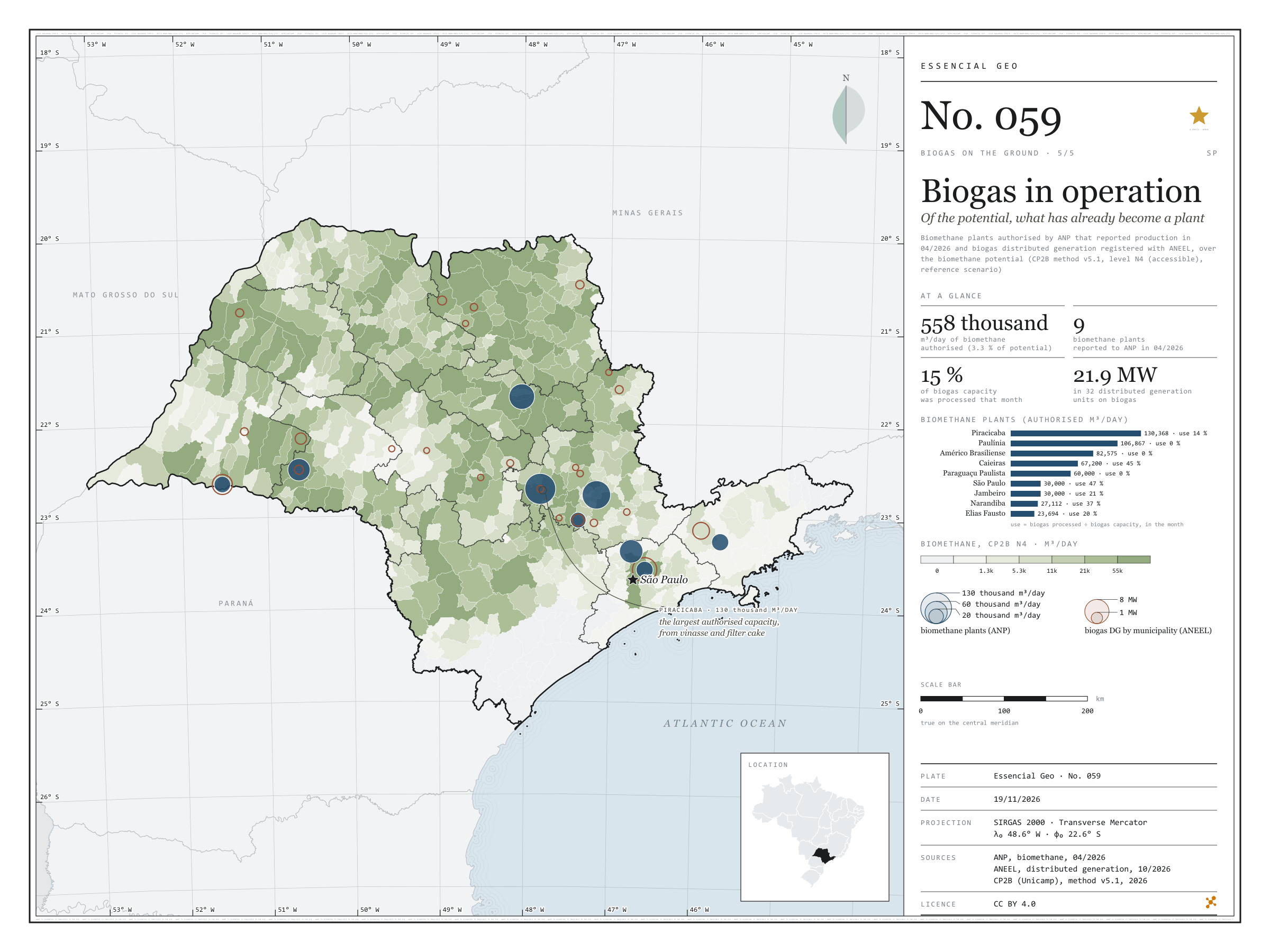
Fig. 059 São Paulo State (SP) EPSG:4674 Source: ANP, ANEEL, CP2B (Unicamp), IBGE

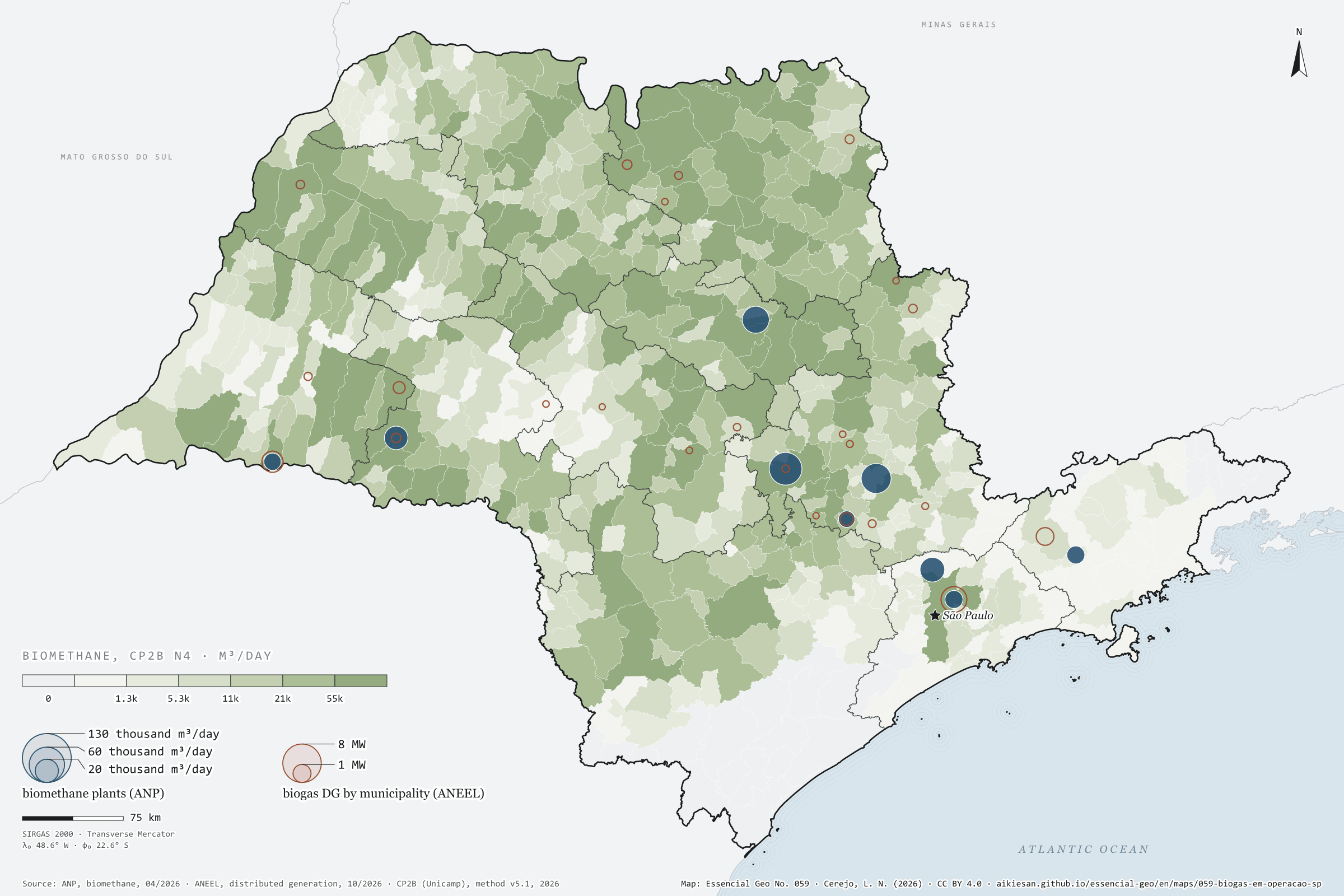
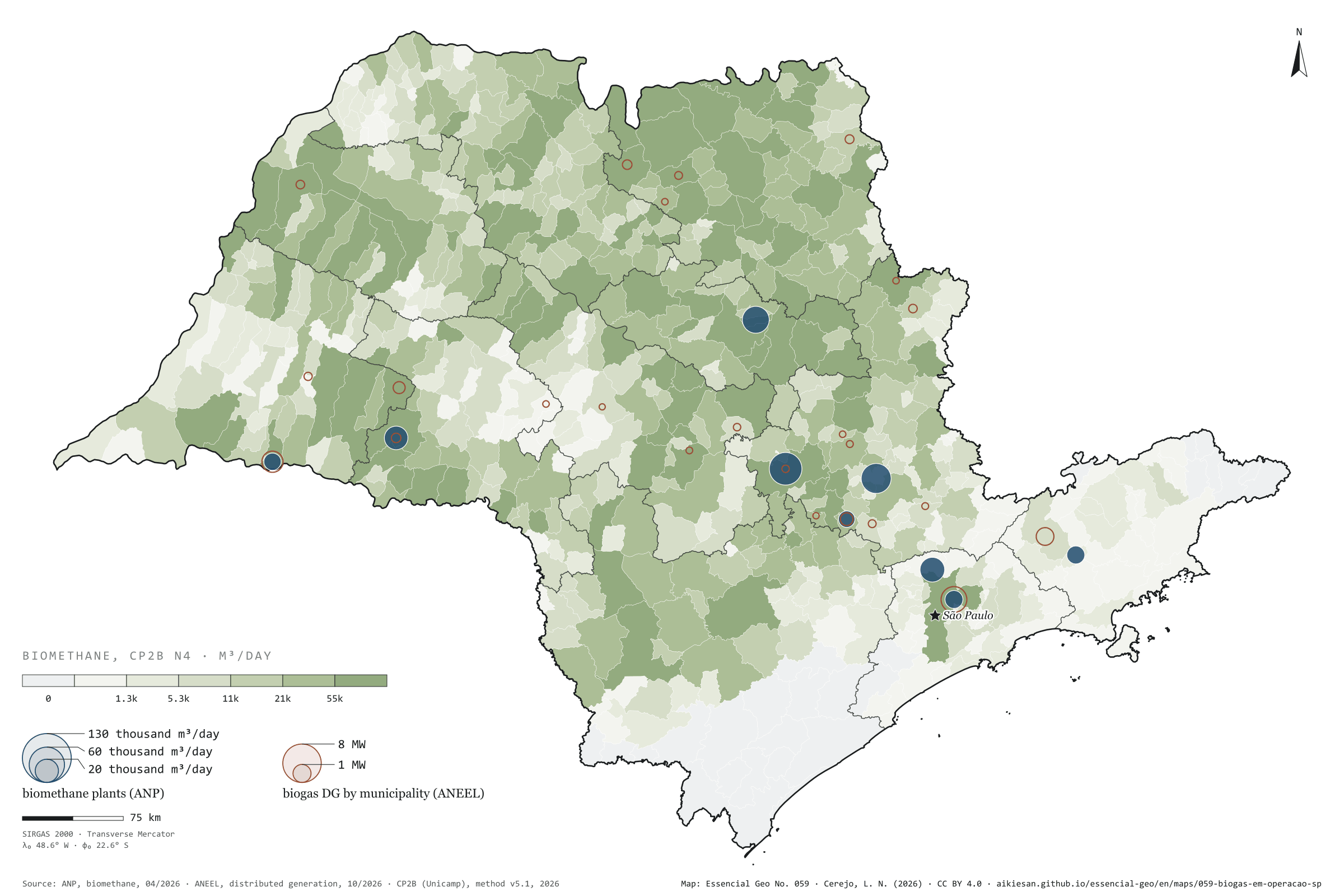
Of a potential of 16.9 million m³ of biomethane a day, how much has already become a plant? In April 2026, nine biomethane plants in São Paulo reported output to ANP. Together they hold 558,000 m³ a day of authorised capacity, 3.3% of the potential, and that month processed only 15% of the biogas they could treat: three of them stood near zero. The largest, Raízen and Geo’s plant in Piracicaba, has 130,000 m³ a day authorised, from vinasse and filter cake; the Caieiras landfill plant runs the most, at 45% use. In electricity, ANEEL lists 32 biogas distributed generation units in the state, with 21.9 MW, in 24 municipalities: most of it at landfills in the capital and São José dos Campos and at a mill in Narandiba; the rest, smaller, mostly from farm manure. The larger biogas power stations are on plate 028. Last plate of the collection “Biogas on the ground”.

Technical record · downloads · citation

At a glance

Authorised capacity of biomethane plants (m³/day)
  • Piracicaba 23.4%
  • Paulínia 19.2%
  • Américo Brasiliense 14.8%
  • Caieiras 12%
  • Paraguaçu Paulista 10.8%
  • other four 19.9%
Authorised capacity over the state’s potential

3.3 %

557,816 of 16.9 million m³/day

Biogas distributed generation

22 MW

32 units in 24 municipalities

Layers

  • plantas_biometano point 9 biomethane plants: company name, CNPJ, biomethane and biogas capacity, biogas processed and use in the month
  • gd_biogas point 24 municipalities with biogas distributed generation: units and capacity (kW) by residue type
  • municipios polygon 645 municipalities: potential, ANP capacity and DG capacity (same GPKG as plate 055)

Metadata

Sources
ANP — Biomethane: authorised plants and monthly output (April 2026) (2026)
ANEEL — List of distributed generation units (open data, October 2026) (2026)
CP2B (Unicamp) — biogas and biomethane potential by municipality, method v5.1 (2026)
IBGE — Municipal Mesh 2025 (2025)
Extent
São Paulo State (SP)
CRS / Projection
SIRGAS 2000 (EPSG:4674)
EPSG:4674
Software
Node.js · d3-geo · QGIS
Method
SP biomethane plants that reported output to ANP in April 2026, with authorised capacity and biogas processed, and ANEEL biogas distributed generation units summed by municipality, over the biomethane potential (CP2B method v5.1, level N4, reference scenario).
Version
v1.0.0
Licence
CC BY 4.0
DOI
being registered on Zenodo

Downloads

Figure to reuse

The map without a frame, with legend, scale, reference system and credit written on it: ready for papers, lectures and slides. In two versions: with the basemap (neighbours and sea) or only the mapped area, on white.

Point a camera at it to open this page.

How to cite

Cerejo, L. N. (2026). Biogás em operação: do potencial, o que já virou planta [Biogas in operation: Of the potential, what has already become a plant] (Version 1.0.0) [Data set]. Essencial. https://aikiesan.github.io/essencial-geo/en/maps/059-biogas-em-operacao-sp/

How to read this plate area, projection, scale, legend and source · 9 terms
1 Area
São Paulo State (SP) The area the plate covers. Outside it, neighbours and sea are drawn in grey, just for orientation.
2 Coordinates and projection
SIRGAS 2000 (EPSG:4674) The layers are in SIRGAS 2000; the drawing’s projection is written in the colophon at the foot of the panel.
3 Scale
Graphic scale bar in the panel The scale bar is true on the central meridian; away from it, measured distances vary a little.
4 Legend and layers
3 layers in the GeoPackage · point, polygon Read the legend before the map: it tells you whether a colour is a rate or a class, and whether a circle is a total.
5 Sources
ANP (2026); ANEEL (2026); CP2B (Unicamp) (2026); IBGE (2025) Every figure comes from a public source, with its year. The data sheet gives each one’s address.

Terms on this plate

Vinasse
The liquid left by distillation, around ten litres per litre of ethanol, rich in potassium. It goes back to the cane fields as fertiliser and can pass through a digester first.
Filter cake
The residue from clarifying cane juice, rich in phosphorus and organic matter: a fertiliser and a biogas feedstock.
Biogas
The gas from the airless breakdown (anaerobic digestion) of organic waste: manure, vinasse, sewage sludge, rubbish. It is 50% to 70% methane; the rest is mostly CO₂.
Biomethane
Biogas upgraded, with most of the CO₂ removed, to ANP’s specification, at which point it replaces natural gas in the pipeline, in industry and in the lorry’s tank.
N1 to N4 (potential levels)
CP2B’s four levels: N1 theoretical (all residue generated), N2 technical (after collection), N3 mobilisable (after competing uses and what already becomes biogas) and N4 accessible (after storage and the logistic factor).
Landfill and open dump
A sanitary landfill is an engineered site: sealed ground, leachate and gas drainage. An open dump is tipping in the open air, banned by Brazil’s National Solid Waste Policy. Landfill gas is biogas.
Distributed generation
Small units connected to the distribution grid, close to consumers: micro-generation up to 75 kW and mini-generation above that, up to a few megawatts. The energy becomes credit on the electricity bill.
ANP
Brazil’s National Agency of Petroleum, Natural Gas and Biofuels: it licenses ethanol and biodiesel plants, tracks filling-station sales and sets the biomethane specification.
ANEEL
Brazil’s National Electricity Agency: it registers every power plant and distributed-generation system, with source, capacity and municipality.

Download

Layers, table and figures, under CC BY 4.0. Cite with the DOI.

Full record and citation

Method notes · No. 059

Biogas in operation in São Paulo

Português · English

Plate No. 059, the last of five in the collection Biogas on the ground: after the potential, the source and the distance to the grid, what already works. MapBiomas biogas plants and SIGA biogas power stations are on plate 028.

What the files contain

The GPKG and CSV are those of plate 055. This plate uses the plantas_biometano layer (capacidade_m3d, capacidade_biogas_m3d, biogas_processado_m3d, utilizacao_pct, referencia) and gd_biogas (unidades, potencia_kw and capacity by type: residuos_animais animal, residuos_urbanos urban, agroindustrial, florestal forestry). Points sit at the municipality’s interior point, not at the plant’s address.

Method

  1. ANP: SP biomethane plants in the latest month reported, April 2026. One plant authorised in the capital whose last report dates from June 2022, with no output, is left out.
  2. Use: biogas processed in the month divided by the authorised biogas processing capacity.
  3. ANEEL: biogas-fired distributed generation units in SP, in the October 2026 list, summed by municipality. Holders’ names are left out, since many are private individuals.

Limitations

  • One month of output is a snapshot: plants starting up or under maintenance show low use.
  • Authorised capacity is in biomethane; the CP2B potential is also in biomethane equivalent, but not all potential needs to become biomethane to be used.
  • Biogas power stations outside distributed generation, such as the capital’s landfill plants, are on plate 028, not here.

View this map’s folder on GitHub

Technical record

Technical record · No. 059

Biogas in operation

At a glance

Authorised capacity of biomethane plants (m³/day)
  • Piracicaba 23.4%
  • Paulínia 19.2%
  • Américo Brasiliense 14.8%
  • Caieiras 12%
  • Paraguaçu Paulista 10.8%
  • other four 19.9%
Authorised capacity over the state’s potential

3.3 %

557,816 of 16.9 million m³/day

Biogas distributed generation

22 MW

32 units in 24 municipalities

Layers

  • plantas_biometano point 9 biomethane plants: company name, CNPJ, biomethane and biogas capacity, biogas processed and use in the month
  • gd_biogas point 24 municipalities with biogas distributed generation: units and capacity (kW) by residue type
  • municipios polygon 645 municipalities: potential, ANP capacity and DG capacity (same GPKG as plate 055)

Metadata

Sources
ANP — Biomethane: authorised plants and monthly output (April 2026) (2026)
ANEEL — List of distributed generation units (open data, October 2026) (2026)
CP2B (Unicamp) — biogas and biomethane potential by municipality, method v5.1 (2026)
IBGE — Municipal Mesh 2025 (2025)
Extent
São Paulo State (SP)
CRS / Projection
SIRGAS 2000 (EPSG:4674)
EPSG:4674
Software
Node.js · d3-geo · QGIS
Method
SP biomethane plants that reported output to ANP in April 2026, with authorised capacity and biogas processed, and ANEEL biogas distributed generation units summed by municipality, over the biomethane potential (CP2B method v5.1, level N4, reference scenario).
Version
v1.0.0
Licence
CC BY 4.0
DOI
being registered on Zenodo

Downloads

Figure to reuse

The map without a frame, with legend, scale, reference system and credit written on it: ready for papers, lectures and slides. In two versions: with the basemap (neighbours and sea) or only the mapped area, on white.

Point a camera at it to open this page.

How to cite

Cerejo, L. N. (2026). Biogás em operação: do potencial, o que já virou planta [Biogas in operation: Of the potential, what has already become a plant] (Version 1.0.0) [Data set]. Essencial. https://aikiesan.github.io/essencial-geo/en/maps/059-biogas-em-operacao-sp/

100%